
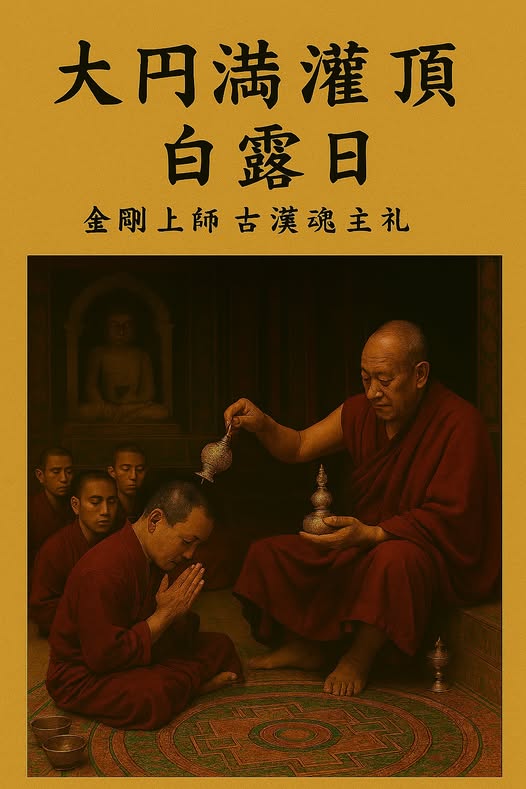
As the air was intertwined with the white dew morning sun and the wind of Typhoon No. 3, the Mandala altar inside the root pagoda presented the image of the Pure Land away from the world’s hustle and bustle. The chief priest of Kokankun himself administered the ceremony and gave kanjo from first to fourth to young monks wearing red robes. It was a solemn ceremony, but it was a ritual with deep interests.
—
壇 Interior composition and atmosphere
– Mandala: Made of colored sand, gold powder, and jewels, this altar depicts the entire image of the Buddha’s Pure Land, symbolizing the completion of the legal world, including the eight gates of eight gates, palaces,
– Root pagoda: In the center of the pagoda, a statue of Buddhist statue and a hallmark, surrounded by a five-color flag, symbolizing the protection of Five-Chinese
– Incense burner and lantern: The fragrance of white amber floats, and the ghee lamp shines like a sea of stars, representing the amber light that destroys the light
—
 The process of quadruple kanumi
1. 1. Vase filling (outside filling)
– The chief priest fills the vase with sweet dew and sprinkles it on the top of the disciple’s head. This symbolizes the purification of the body and the opening of the door to the practice of Esoteric Buddhism.
– A disciple visions how his mind transforms into a Buddha statue, mandala and heart become united.
2. Secret Kanjo (Naikanjo)
– Through the oral transmission of the Shingon of Shinto and Buddhism and conceptive techniques, disciples will be able to control Qi, meridians, and
– This stage emphasizes trust between master and disciple and inheritance of the laws.
3. 3. Wisdom to the top (secret top)
– The chief priest guides the disciple to meditate on the rise and fall of the synthetic hole and the emergence of tammo, and let them experience the state of Zen, where bliss and sky unite
– This symbolizes illuminating all useless talk by the wisdom of Hannya.
4. Ultimate Kanjo
– Points directly to the essence of the heart and conveys the insight of Zokchen or Mahamudra. – This is the deepest level of awareness, meaning that a disciple has become a member of the Buddhist monks and has inherited the legacy of the Nyorai.
—
 Ritual symbolism and meaning
– Kanjo: Buddha’s Great Mercy Water purifies ignorance and deeds of work.
– Nyujo: The noble position of Buddha, giving practitioners the qualification and responsibility to inherit Buddhism.
– Mandala: More than just a mandala image, it is a reflection of the heart, reminding practitioners that the inner and outer Jodo are one.
– The four-layered phase: From outside to inside, from form to heart, each stage deepens, representing both the legacy of Buddhism and the manifestation of the heart’s essence.
—
 End of the Dharma
When the last sweet dew fell down, the chief priest gently touched the top of the disciple’s head with a ceremonial tool and declared the completion of the kanjo. The bells and drums were ringing, the monks chanted the devotional bells, and they wished that merit would be fulfilled in the ten directions of the world, and that all living things would be attained The young priests clothed in scarlet robes joined their hands and saluted them and planted in their hearts the seeds of peace that will never pass away.
2025年9月9日